Outdoor Spaces Safe Enough for Family Use
Porch & Deck Repair in Auburndale for restoring structural stability and surface integrity to outdoor living areas damaged by weather exposure and daily use
When deck boards flex underfoot or railings wobble when you lean against them, the outdoor space shifts from a gathering area to a liability. These structures take direct sun, standing water after storms, and constant humidity that works into every joint and fastener, creating conditions where wood deteriorates and connections loosen faster than on any other part of the home. Roberts Southern Home Repair Service LLC repairs porches and decks throughout Polk County, addressing safety issues and surface damage while evaluating whether the structure can be restored cost-effectively or whether sections need replacement to meet current load requirements.
The repair process examines structural framing for rot or insect damage, replaces compromised boards and support members, reinstalls railings and steps that no longer meet code spacing, and addresses surface damage that creates splinter hazards. Regular maintenance extends the lifespan of these outdoor areas significantly, often delaying full replacement by five to ten years when problems are caught early.
Schedule a deck or porch evaluation before hosting outdoor gatherings where safety concerns could create injury risks for family and guests.
What Changes After Structural Repairs Finish
Deck and porch repairs start with identifying which components have lost structural integrity and which are cosmetically damaged but still sound. Load-bearing joists and posts are tested by inspecting for soft spots, checking connections for movement, and looking for water stains or discoloration that indicate ongoing moisture problems. Surface decking is evaluated board by board, since deterioration is rarely uniform. Railings must meet specific spacing requirements to prevent children from slipping through, and stairs need consistent riser height to avoid tripping hazards.
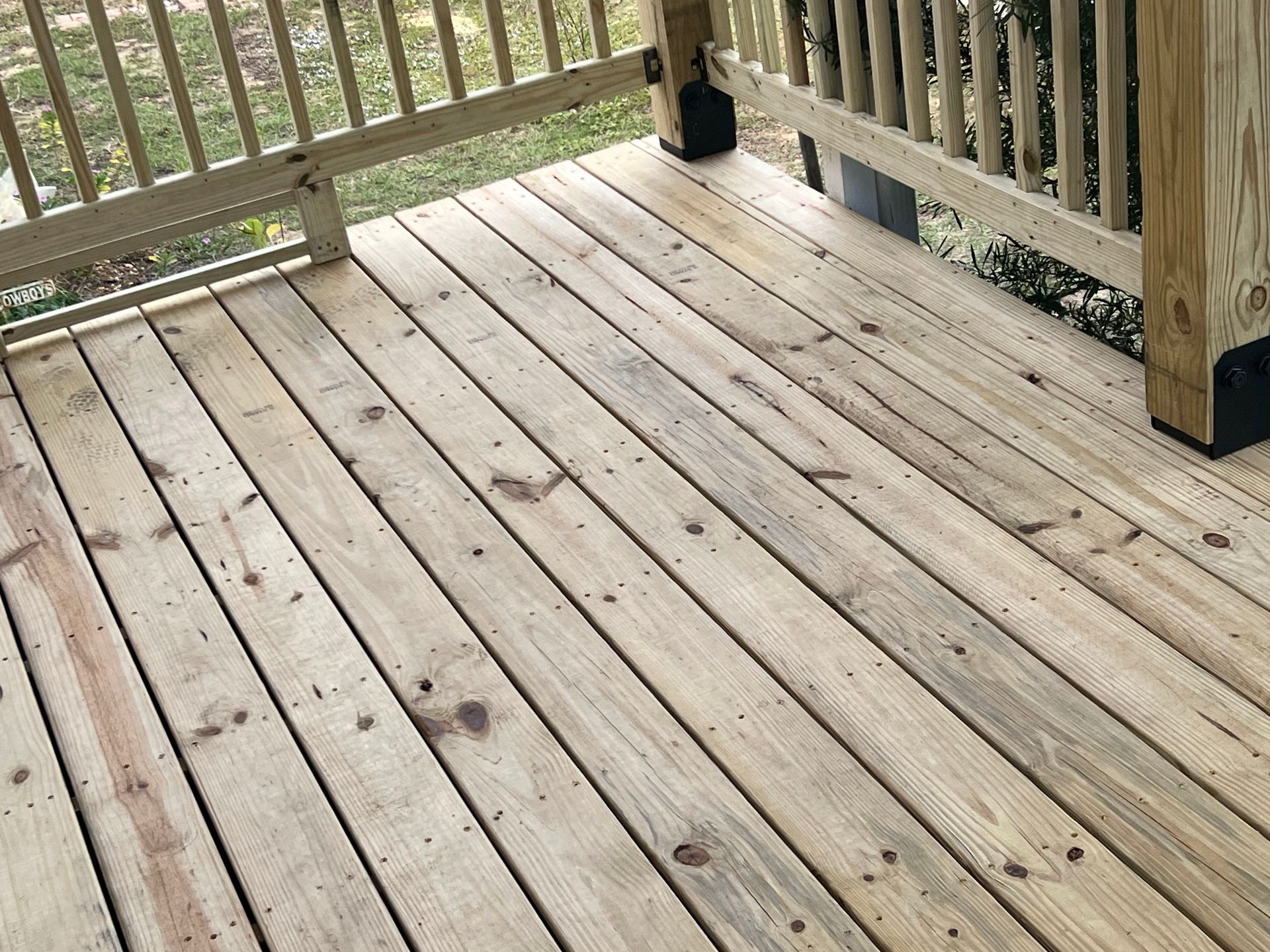
After repairs, the deck or porch feels solid underfoot without flexing or bouncing, railings provide firm support without any give when you apply weight, stairs land consistently without unexpected height variations that catch your foot, and surface boards are smooth enough to walk barefoot without splinters. You'll also notice improved drainage where boards are spaced properly to shed water instead of trapping it in gaps where debris accumulates and rot starts.
Repairs also address cosmetic issues that affect how the space looks and functions: replacing boards with severe cupping or splitting, resetting popped nails that create trip hazards, reattaching trim pieces that have pulled away from posts, and correcting areas where paint or stain has failed and left wood exposed to accelerated weathering. The combination of structural and cosmetic fixes restores both safety and appearance.
Questions Before Starting Your Project
Homeowners need clear information about what deck and porch repairs involve and when replacement becomes the better option financially.
How do you determine if a deck can be repaired or needs replacement?
Repairs work when framing and support posts remain structurally sound and only surface decking, railings, or isolated joists need replacement; full replacement is necessary when multiple structural members show rot, when the foundation has shifted, or when the existing structure doesn't meet current building codes for your area.
What causes deck boards to rot faster in some areas than others?
Boards near planters or under roof drip lines stay wet longer after rain, boards in full shade never dry completely between storms, and boards installed without proper spacing trap debris and moisture in the gaps, all of which concentrate deterioration in specific zones.
Why do railings become the first component to fail?
Railings experience lateral force every time someone leans or pushes against them, which works fasteners loose over time, and the top rail catches standing water that seeps into end grain and post connections where rot starts before becoming visible on outer surfaces.
When is the best time to repair outdoor structures in Florida?
Schedule repairs during the dry season from late fall through early spring when wood moisture content is lowest, allowing better adhesion for fasteners and finishes, and when work won't be interrupted by afternoon thunderstorms that delay progress.
What maintenance extends the time between major repairs?
Apply water-repellent sealers every two to three years, sweep debris from between boards to prevent moisture trapping, inspect and tighten loose fasteners annually, and trim back vegetation that holds moisture against the structure or blocks airflow underneath.
Roberts Southern Home Repair Service LLC evaluates whether existing outdoor structures can be brought back to safe, functional condition or whether the extent of damage makes replacement the more practical path. Set up an inspection to get a clear assessment of what your porch or deck needs and what that work will involve.